The SPF50 lotion feels thick at first, then softens as sunflower oil and shea butter help the zinc spread. That blend is where Kate Solomon spends her time.
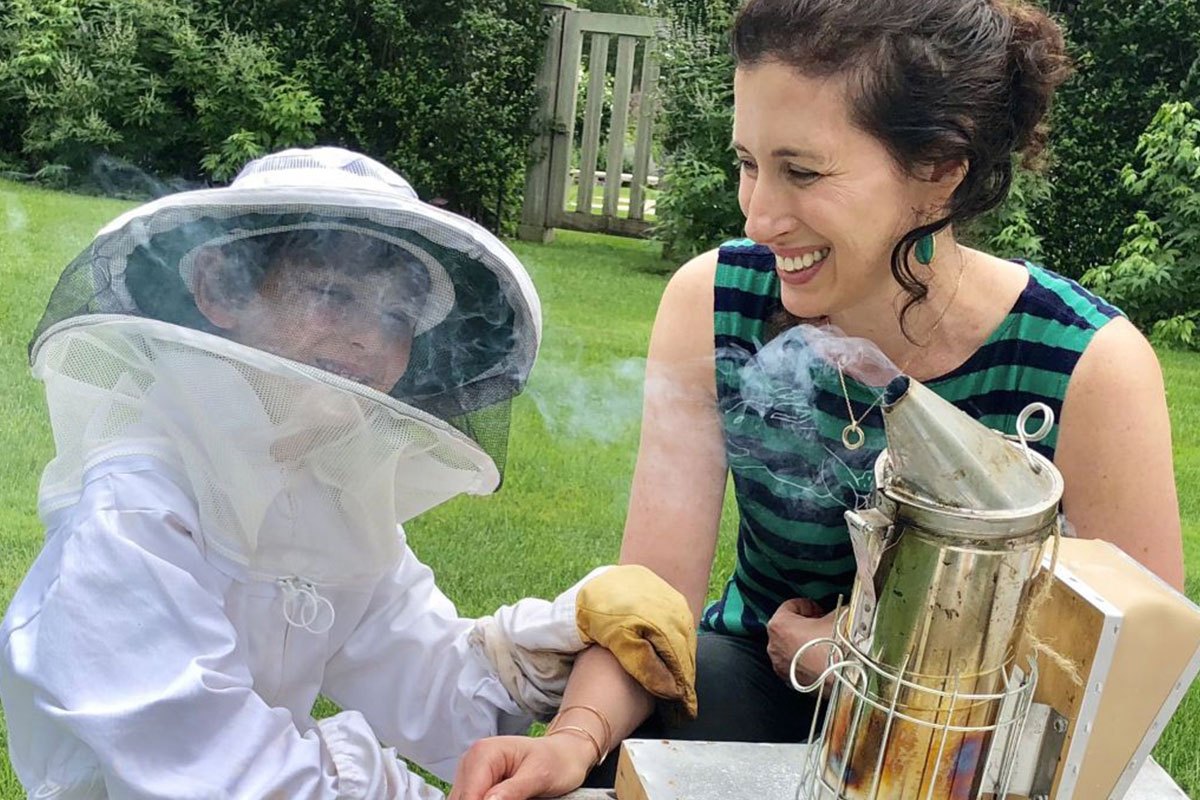
She learned steadiness around hives. At seven she kept bees beside her father on their family farm, then later spent two and a half years in Paraguay teaching women farmers to tend bees while stirring beeswax and honey into plain soaps and lotions. The habit stayed with her. Watch the material, use what is near, keep the method clean.
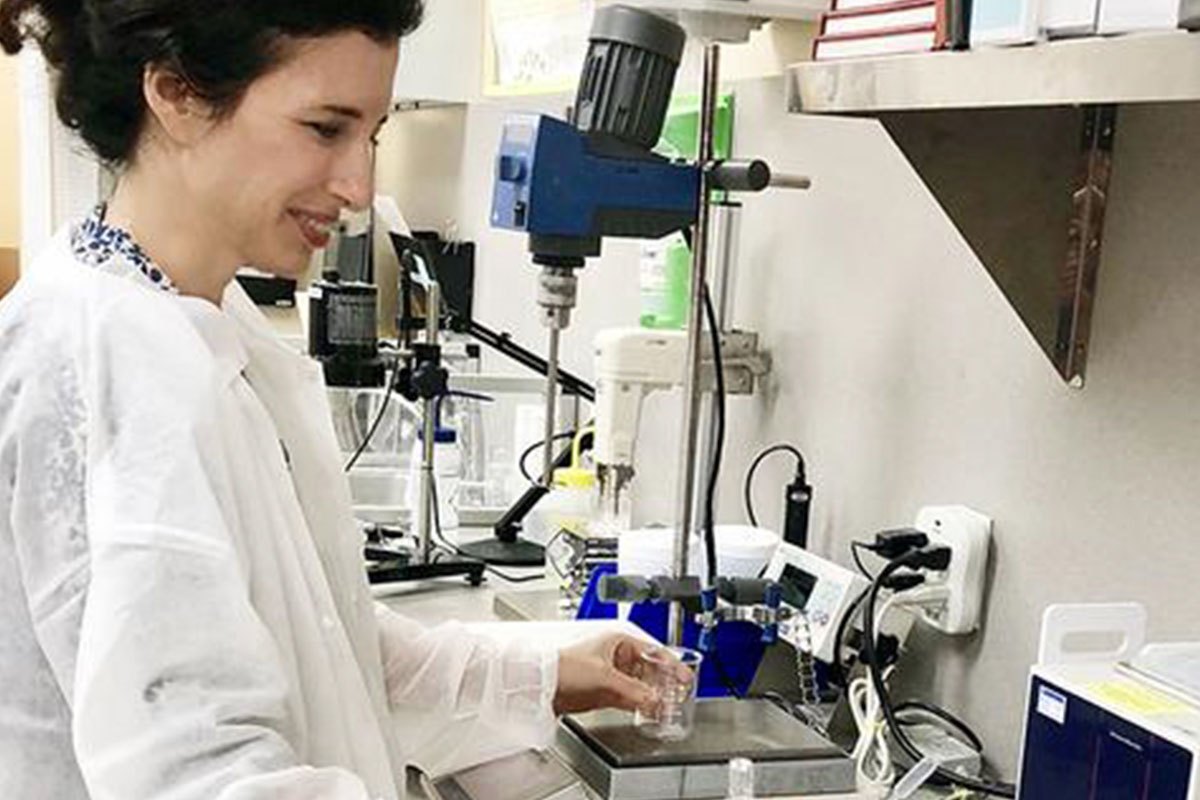
After Paraguay she worked for over ten years in product development at Avon, LVMH and Loreal. While pregnant with her first child in 2007 she started to develop plant and mineral formulas. Her son named a stuffed bunny Babo, and she gave that name to the company she started in 2010 with ten products in four collections. Safety and comfort set the direction.
Read across the line now and the direction holds. Babo Botanicals makes care for babies to adults with sensitive skin, leaves out sulfates, parabens, phthalates, petrolatum and chemical UV filters like oxybenzone, and centers sun care on zinc oxide alone. It is family care built on plants, judged by tolerance more than newness.
You spent more than a decade in product development at Avon, LVMH and Loreal, and in 2007 while pregnant you started to develop plant and mineral formulas for your own soon to be born baby. How did formulating for a newborn change what you kept in the bottle?
My family is part of my work. I grew up near our beekeeping farm and I kept bees with my father starting at age seven. A hive teaches patience. You observe, you pause, you hold steady hands. Then I applied and was placed in Paraguay in South America, where I lived for two and a half years. I showed women farmers how to keep bees and together we prepared soaps and lotions from beeswax and honey. It was hands on work. We relied on local supply, we prepared it carefully, and we passed it around. I hoped to join social responsibility with product development, which in simple language meant producing something helpful that spared the user and the source place. I aimed toward a company grounded in natural ingredients, and the benchmark began there. Beeswax shows measure. Honey shows control. A small amount performs when the foundation is solid. I still build formulas that way, with certified organic botanicals and a short list of ingredients we always avoid.
You kept bees with your father from age seven and later taught beekeeping to women farmers across two and a half years in Paraguay while making soaps and lotions from beeswax and honey. What still guides your handling of natural materials at Babo Botanicals?
In 2007, I set out to realize my goal of creating plant and mineral products. I had started to consider the concept while pregnant in 2007. I noticed a real opening in hair, skin and sun care for babies and children. It felt personal. I also created shampoos and lotions that I planned to apply on my soon to be born baby. When you build for an infant, each ingredient line carries more weight. You question if a foam agent belongs, if a fragrance belongs, if the preservation can stay minimal. My tenure at Avon, LVMH and Loreal had shown me how to craft refined textures in volume, yet it had also revealed how many additives enter for shelf charm. I started to clear them away. We are a family brand and that sets us apart in the market. We offer goods for babies through adults with sensitive skin. The span seems wide until you picture one home. One shower shelf, one measure of mildness, shared rules for child and grown up.
Your son named his stuffed security bunny Babo, and you began in 2010 with ten products in four ranges including moisturizing baby, swim and sport, lavender calming and lice repel. Why organize around comfort and security instead of one star category?
My son named his stuffed security bunny Babo, and I held onto the name because it stood for safety, comfort and security. That seemed truer than using my name or an ingredient name. From the beginning I sought plant based care that an entire family could rely on, and that required more than a single fix. We debuted in 2010 with ten products in four ranges, including moisturizing baby, swim and sport, lavender calming and lice repel. A family day crosses all those moments. A morning rinse, a playground hour, a swim class, sleep. If the label solved only sun, or only bath, caregivers would still need to juggle standards. I chose to set one standard and keep it across routines. Family Comes First is our internal saying. Rooted in Nature, Growing with Purpose is the other line we repeat. Both describe the same routine. Choose certified organic botanicals where they help, keep zinc where protection helps, and leave out sulfates, parabens, phthalates and petrolatum in every case.
You hold to zinc as safe and effective and use zinc oxide alone in the majority of your products, turning away from chemical UV filters like oxybenzone. Why keep that boundary when chemical filters rub in clearer and lighter?
Zinc is such a safe and effective ingredient, and I truly hoped to introduce it. In most of our products, we rely on zinc oxide alone. The decision is intentional. Zinc rests on the surface and screens UVA and UVB rays, and it fits the sensitive skin we serve, from babies through adults. Chemical filters may look more sheer and feel weightless, and I see why labels favor them. Yet we prefer to design for sensitive and eczema prone skin over chasing fragrance or invisibility. We prefer certified organic and natural ingredients to lower cost chemicals. A caregiver should spread sun care on a child and then on her own face with the same reasoning. There is a feel compromise. Zinc may seem dense and may leave a veil unless blended carefully with plant oils and butters. So we invest effort there, in the mix, in how sunflower oil and shea butter support the mineral, in how a lotion glides and settles. The boundary stays because shoppers keep it. They seek mild care they can repeat each day.
In 2017 you introduced a fragrance free line for eczema prone skin on the baby side, then in 2018 you entered 450 Whole Foods stores with growth in high double digits led by mineral sunscreens. What did caring for eczema prone skin teach you about scent, lather and moisture?
The mix joins calendula, chamomile, kudzu, watercress and meadowsweet, each certified organic. I picture them as a meadow in a bottle, every one with a task. Calendula and chamomile ease the touch and encourage comfort on dry or reactive skin. They lend a wash or lotion a smooth glide instead of a tight finish. Kudzu and watercress add a fresher green quality to the foundation and keep the recipe feeling even, not rich. Meadowsweet lifts the combination and prevents dullness. Brewed together they soak the base so zinc or cleanser never stands apart. You notice during use. A baby lotion stretches without pull. A sunscreen presses down without drag. We borrow the concept from plain herbal steeps. Soak the plants, allow their traits to enter the oil and water stages, then shape around them. It is not garnish. It is how we hold a mineral recipe comfortable for a child who will agree to another coat, and for a caregiver who will place it beneath makeup.
You watch closely, you wait patiently, you keep your hands calm.
Kate Solomon
You created a proprietary Nutri-Soothe complex of five certified organic botanicals used across many formulas. Which plants form the blend, and how does each shape the feel and behavour of a lotion or wash?
We make goods for babies through adults with sensitive skin, and the fragrance free project clarified that pledge. Eczema prone skin rejects added scent and aggressive foam. So we left fragrance out of that line and held cleansing gentle. Foam is where many baby cleansers fail this group. A tall airy lather can strip. We picked mild cleansing that leaves skin settled, then added moisture promptly. A fragrance free baby lotion with plant oils, a face cream for dry cheeks, an ointment for cracked or chapped spots. The sequence counts as much as the recipe. Give a quick bath in lukewarm water, pat dry, smooth on lotion while skin feels damp. In 2018, as we entered 450 Whole Foods stores, growth in high double digits came from mineral sunscreens. That showed families studied sun labels as they already studied bath labels. Sensitive skin asks for one consistent standard across sun, wash and moisture. No split rules.
You grew across the nation in 2018 and added care for adults with sensitive and eczema prone skin. How do you lift a baby standard to a grown up face without it feeling thin or plain?
We began with hair, skin and sun care for babies and kids, yet a mother samples what she purchases for her child. She rubs the lotion over her hands. She borrows the sunscreen. So reaching adults with sensitive and eczema prone skin felt logical. The benchmark does not shift. It has no sulfates, no parabens, no phthalates, no petrolatum, and no chemical UV filters like oxybenzone. Texture and finish shift. A grown up face prefers a fluid that layers beneath makeup, a tint that quiets the zinc look, a milk that hydrates without gloss. We retain the Nutri-Soothe foundation and the zinc, then tune carrier oils and touch. Sunflower oil and shea butter in the body lotion give skin a softer cushion. Lighter face fluids spread sheer and dry neat. The ground stays shared, the finish is tailored. A baby asks for comfort. A grown up with reactivity asks for comfort that appears refined. Both ask for a recipe they can repeat each morning without friction.
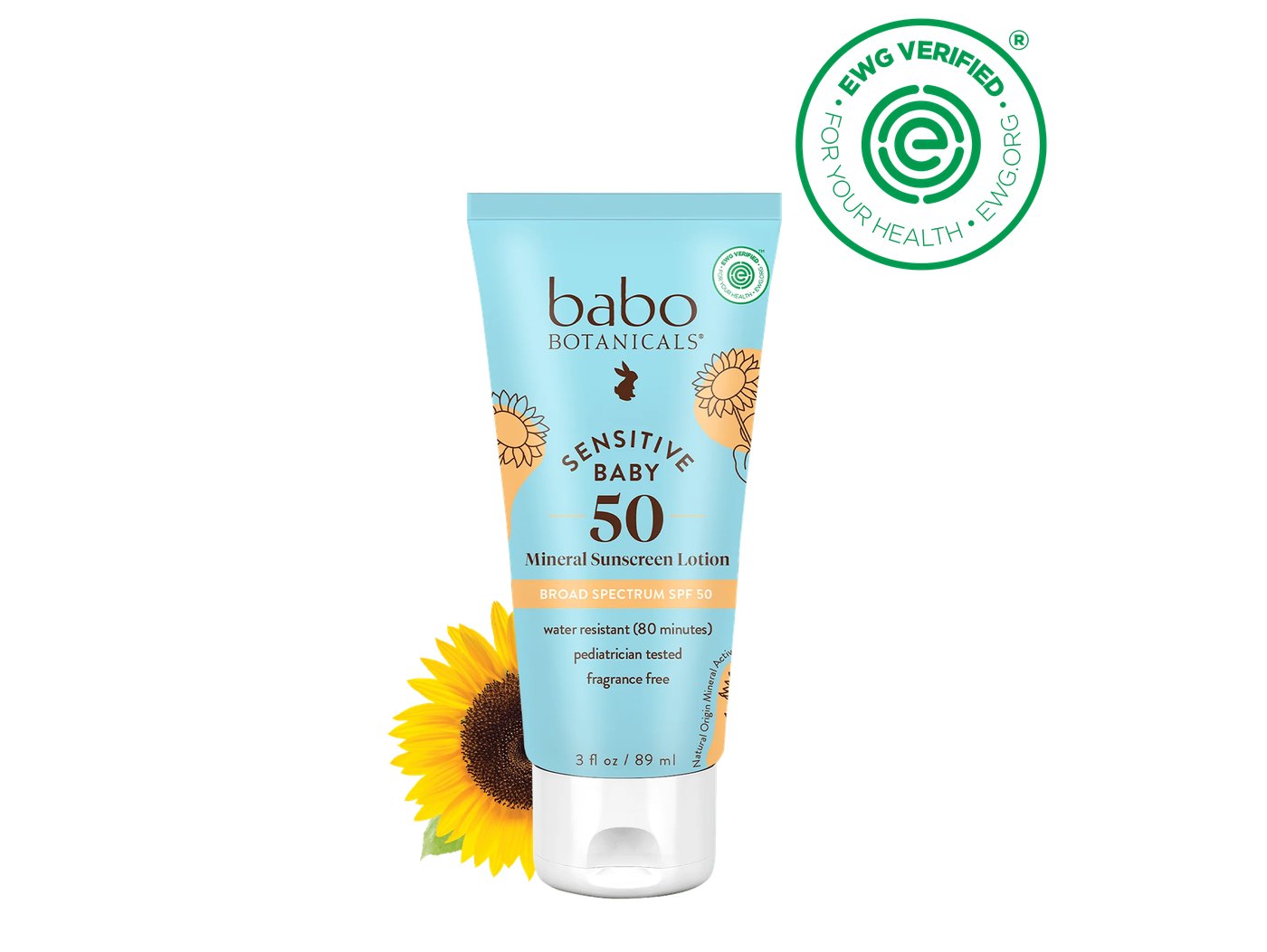
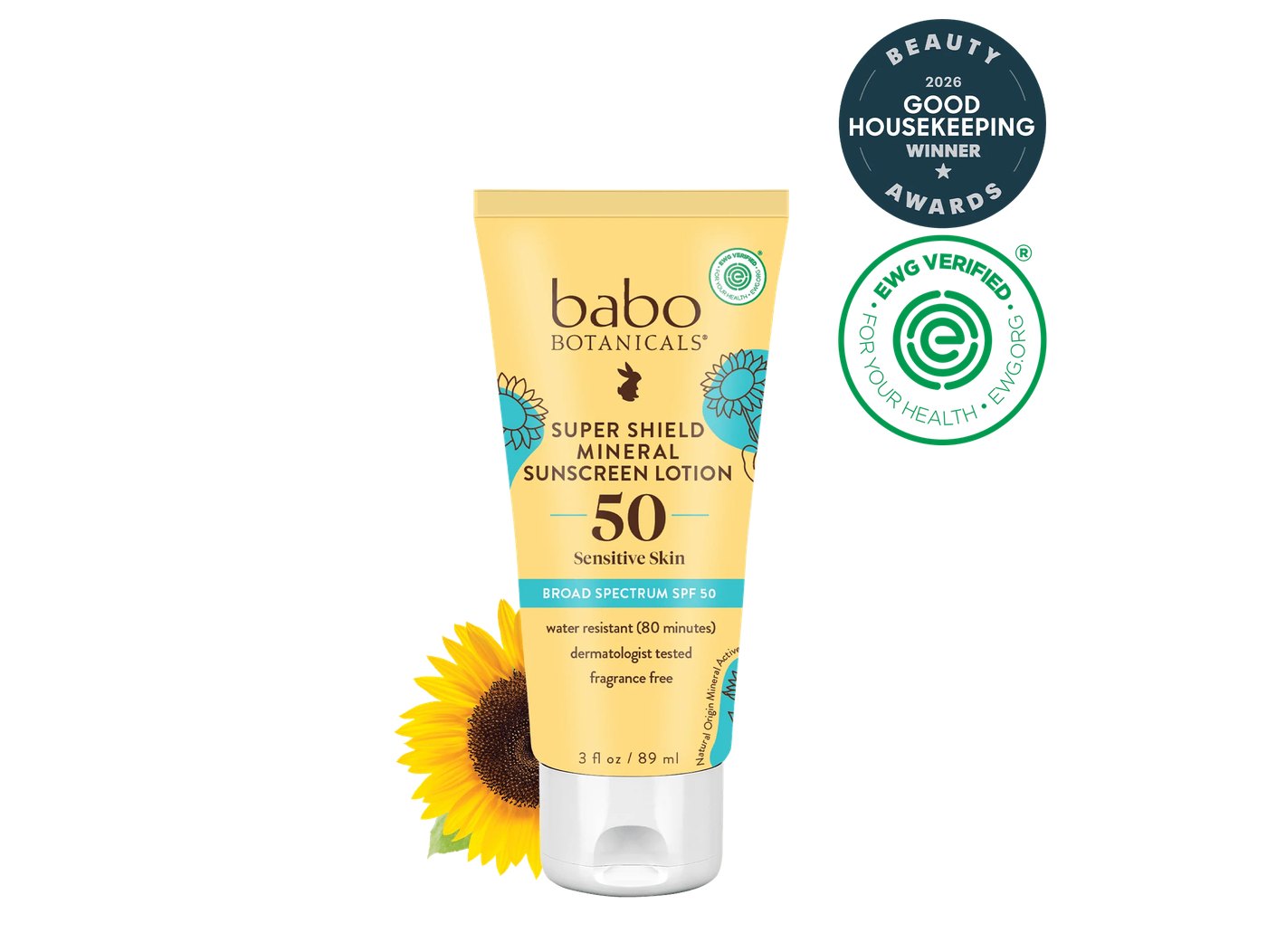
Your Sensitive Baby Mineral Sunscreen Lotion SPF50 and your Super Shield Sunscreen Lotion SPF50 both sell best at 19 dollars, one for babies and one for sensitive skin broadly. How should a household apply each across face, body and reapplication?
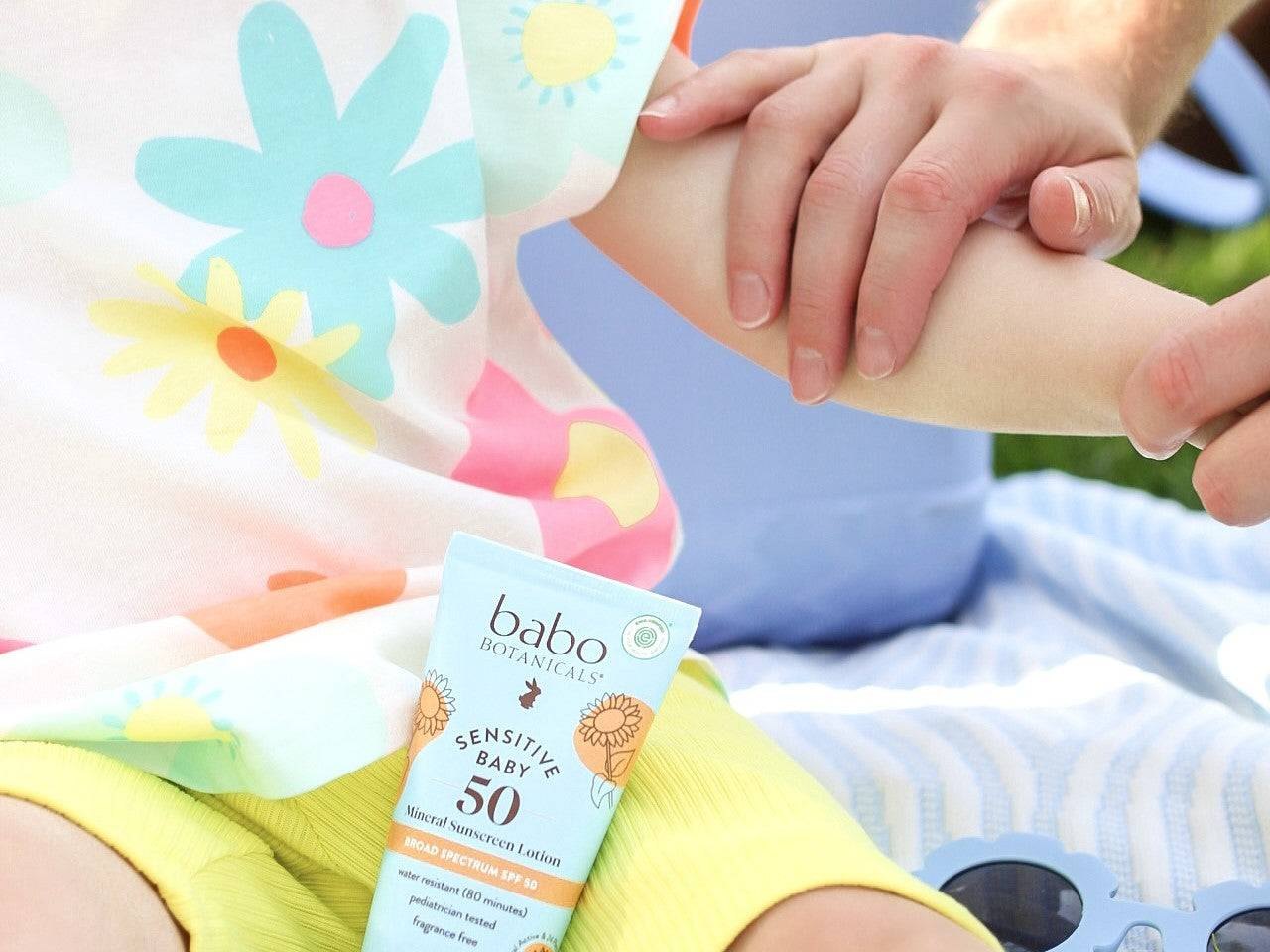
See them as twin rows in one plot. Sensitive Baby Mineral Sunscreen Lotion SPF50 is our mild baby sunscreen you can trust, crafted with natural origin mineral zinc oxide and water resistant for sensitive skin. Spread lotion across face and body for sun defense, in a thick even coat ahead of outdoor time. Spend care on ears, neck and tops of feet. Reapply after swimming or sweating and through the day. Super Shield Sunscreen Lotion SPF50 is our mild sun care you can trust for sensitive skin at large, crafted with 24 plant based ingredients including sunflower oil and shea butter. Spread lotion on skin for sun defense in the same attentive manner, and value that it serves the entire home. I advise caregivers to store one in the swim bag and one near the entry. The method stays plain. Shake when required, warm across palms, press and glide until coverage looks uniform. Zinc performs when it builds that uniform shield. A hurried sheer coat is the usual cause of burn, even at SPF50.
Your Daily Sheer Tinted Mineral Sunscreen Fluid SPF50 at 24 dollars brings zinc to the face as a lightweight tinted fluid for daily wear. What did tint, slip and layering show you when moving zinc from the beach bag to the morning routine?
The face demands extra. It wants glide, a tint to soften zinc paleness, a fluid that rests nicely solo or below makeup. Daily Sheer Tinted Mineral Sunscreen Fluid SPF50 is our tinted mineral sunscreen for face you will wish to apply daily, designed for sensitive skin as a light zinc oxide recipe with broad spectrum SPF50. Spread daily on face for sun defense as the closing stage of morning care. Layering taught the lesson. Cleanse, add light moisture if required, then ease a coin sized portion across face and neck and allow it to settle ahead of makeup. If you sheer it down to dodge color, defense drops. So the tint must suit enough tones that users spread a full dose. Charge the base with plants for glide, hold the mineral film even, and let tint quietly turn zinc into habit rather than task. That shift moves zinc off the beach bag shelf and onto the vanity.
Closing note from the desk
What remains is steady hands on work. Solomon tended, then showed others how to tend, then poured tending into bottles. The hives, the Paraguay seasons, the years inside large beauty firms, the pregnancy in 2007, the bunny called Babo, the ten goods in 2010, the arrival in 450 Whole Foods doors in 2018. The ground never changed.
Babo Botanicals aimed to offer health and beauty answers for sensitive and eczema prone households without trading family health or the environment. Read closely, the pledge becomes zinc handled with patience, plants steeped on purpose, and a smooth morning coat drawn across small shoulders and grown cheeks alike. If scalp or skin flares persist, check with a dermatologist, or a pediatrician for a child.
Product spotlight
Sensitive Baby Mineral Sunscreen Lotion SPF50 sells for 19 dollars. A water resistant mineral lotion with natural origin zinc oxide for tender baby skin. Pat evenly across face and body ahead of sun, include ears, neck and feet, then renew after swim, sweat or through the day.
Super Shield Sunscreen Lotion SPF50 sells for 19 dollars. A mineral lotion for reactive skin with 24 plant based ingredients including sunflower oil and shea butter. Warm in palms and press across bare skin as the shared daily sun coat, and add more layers during outdoor hours.

Diana Maddox
Diana produces the interviews at Body of Work: the research, the question lists, the follow-ups. She asks every founder to describe their own bathroom shelf, and the answer is usually the best part of the story.
More from Diana Maddox →